From Napster to Now: What My 15 Years in the Music Business Taught Me About Surviving AI as a Web Developer
I recently became unemployed, so I've been spending a lot of time on LinkedIn. I've seen lots of posts and comments from software developers about how Generative AI currently affects their industry.
The posts and comments are both negative and positive, and the negative ones share a common fear. GenAI, armed with the ability to code up entire apps in minutes, is rapidly taking software dev jobs.
Being unemployed, you'd think I'd be worried. But I worked in the music business before I wrote code, and that industry went through a similar disruption.
That disruption was digital music downloading — particularly, Napster. As noted in my Napster documentary review, Napster was the first time the new internet business models directly challenged the traditional brick-and-mortar ones.
While Napster didn't destroy the music business altogether, it forced the industry to change. That experience has taught me that developers need to adapt to an AI-driven world.
Back When I Was In The Music Business
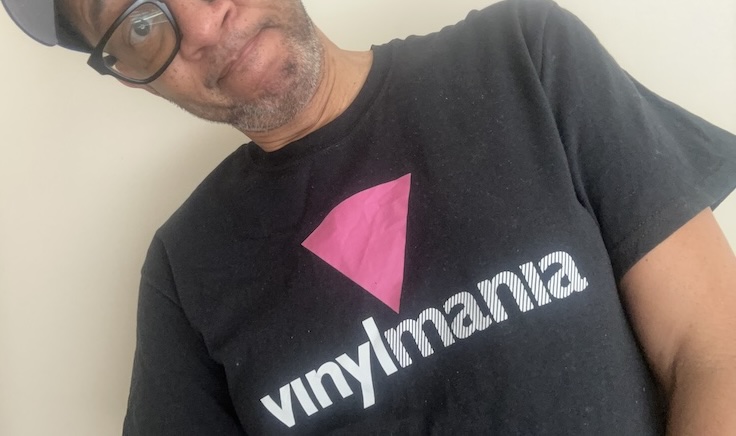
I worked in the music business for 15 years, beginning with internships and mailroom work. I also worked at the famed Vinylmania Record Store in New York City.
Record stores were basically my second home ever since I was ten years old, so I really loved that job. With that affinity for retail, I eventually moved into sales jobs at various record labels. I did some marketing on the side, but mostly sales.
I worked and interned at some pretty cool companies over the years: Concrete, Caroline, K-Tel, Putumayo, Giant Step, Jive. I also worked at Strictly Rhythm, the world-renowned dance label — my first office job in the music business.
When I Noticed Things Starting To Change
One day, when I was still working at Strictly, I bought a copy of Vibe Magazine during my lunch break. Inside that magazine was an article on the rising popularity of MP3 files.
MP3s were digital files containing individual songs. They were relatively small in size — 3-4 MB at most.
People were installing high-speed internet in homes by then — DSL, cable, and the like. So downloading multiple 3-4 MB music files was suddenly easy. The article claimed that all this could eventually crater the music industry.
Now, I was already familiar with MP3s at this point. I'd been tinkering on the internet and knew people were sharing them via email, ftp and newsgroups.
But to know this required knowing how to navigate the internet underground. The Vibe article was one of the first discussions of MP3s outside of this underground and inside pop culture.
Truthfully, I didn't really think much about the Vibe article — I viewed it as a one-time thing. Then Spin ran a similar story, as did MTV.
At that point, I thought the music business really was in trouble. I knew I needed a "Plan B": a plan for if the music business suddenly disappeared.
So I bought a $2,000 Gateway computer and a bunch of Peachpit Press books. I taught myself web design and development, and grabbed as many freelance jobs as I could.
Napster Shows Up
In the middle of all this studying, a team of coders led by Shawn Fanning built and released Napster. It was software that let users share MP3s with other Napster users over the internet.
Napster pushed MP3 downloading to critical mass. Hundreds of thousands of people worldwide shared music for free.
Then the recording industry sued Napster, generating a ton of free publicity for the company. As a result, that group of hundreds of thousands of people grew to millions seemingly overnight.
The recording industry would eventually win in court and Napster would be forced to shut down. But the damage to the industry was already done.
People would find other ways to download music for free and get stealthier about it. A recession — driven in part by the dot-com crash and the 9/11 tragedy— made things worse. People simply didn't want to pay for music anymore.
As a result, the industry lost thousands of traditional jobs, especially in sales. The industry would rebuild itself around things like iTunes, Spotify, and a new licensing structure.
But many who lost their jobs left the music business altogether. Many simply quit — frustrated by watching people refuse to pay for music.
I remember a colleague emailing to say he was leaving his senior music role at a well-established company. When I called him to ask why, his simple answer was, "I'm done competing with free!!"
I stayed four more years, still doing freelance web design work on the side and building a portfolio. That portfolio was eventually strong enough to land me a web design job at Revlon Cosmetics. And my career progressed from there.
(Side note: Joseph Menn's book, All the Rave: The Rise and Fall of Shawn Fanning's Napster is a fascinating recap of Napster's history. Read my review.)
Adapting
Many music business employees complained that Napster was destroying their careers (ironic considering how many of them were using Napster themselves). But the fact remains: Napster succeeded because it gave consumers EXACTLY what they wanted.
AI is doing the exact same thing. Businesses, developers of all skill levels, family members...they all want to use AI in their daily lives.
Looking back at my time in the music business, I accept that adapting to change meant leaving the business altogether. But unlike my music industry pivot, I have no plans to leave software development.
Instead, I'm choosing to adapt to AI. I believe the best way to adapt is understanding AI's role in system design.
To adapt like this, first, a solid understanding of the application's requirements is a must. A project with solid, written-down requirements should be completed before an LLM receives a single prompt.
Second, flat-out vibe coding — building an app with a handful of prompts — can only get you so far. Knowing what's under the hood still matters. Using an LLM to build a React app doesn't replace knowing React..
You still need to understand it, as well as continuous integration (CI), GitHub hooks, Jenkins Jobs, etc. I also believe that implementing the Agent Skills Open Standard into AI-built apps is a must-do.
I think Alex Maccaw's "vibe coding" blog post captures both points well:
Contrary to popular belief, I believe Vibe coding is most effective for senior engineers. If you know what you're doing, have a deep understanding of the frameworks and libraries, and a clear idea of the way you like to do things, Vibe coding is like adding Nitroglycerin to your productivity.
Pessimism Will Get Us Nowhere
Even if people think implementing AI in software development is ineffective, it's here to stay.
One of the major AI complaints I see on LinkedIn is that it generates buggy code. It also has a bad reputation for handling types in Typescript.
Issues like this are well-known and LLM companies tend to fix them quickly. Plus, a seasoned developer can step in — either fixing it themselves or redirecting the LLM.
AI has also received its share of bad press. In the few days prior to this post's publish date, Anthropic experienced an outage that affected its Claude tool. Also, Donald Trump announced a federal ban on Claude — citing a dispute over its use in the military.
I saw a lot of bad press about Claude over those days. I didn't see any stories about people stopping to use it as a result.
The negative posts, the outages, the bans — none of it will stop AI.
Conclusion
My "Plan B" moment, buying a computer and teaching myself web design, was the right call. Leaving music wasn't what I wanted. But not paying the bills wasn't an option either.
Generative AI has brought a seismic shift to software development — just like Napster did to music. That business didn't disappear, but it was forced to do a hard reset of itself.
That hard reset included people leaving the business altogether, including me. I'm not leaving this time and I don't want experienced developers to do the same thing.
AI has opened a new world to our developer community. We can build a lot of really complex stuff, fast.
We have a world of creativity at our fingertips...we just need to embrace it.
At least, that's what I'm doing. Because I have no choice.